


Every startup before Series A faces the same dilemma.
You’ve got something working. Customers are coming in. Growth is happening. But you know (usually, somewhere deep in your gut at 3AM) that what got you here won’t get you there.
So you have to take a risk. Change something fundamental. Place a bet on the future before you can afford to lose.
The hard part isn’t taking the risk. It’s knowing which one to take. And when.
Let me tell you about Ollo.
The problem we thought we had
Picture this: You’re growing fast. Customers love what you do. But they keep asking for more. Not just “can you add this feature?” More like: “Can your AI do everything?”
That’s what we were hearing from customers and prospects earlier this year.
We made Neople as a customer support agent. It was good at that. Really good. But customers didn’t want a specialist—they wanted an all-rounder coworker. Someone who could learn their processes, integrate with their tools, handle whatever they threw at it.
The question became clear: Are we a tool that’s going to resolve your customer support questions? Or are we a solution that customers can use to automate their customer support questions?
Subtle difference. Massive implications.
So we had a choice. Keep refining what we knew worked. Or bet on what might work better.
We took our bet.
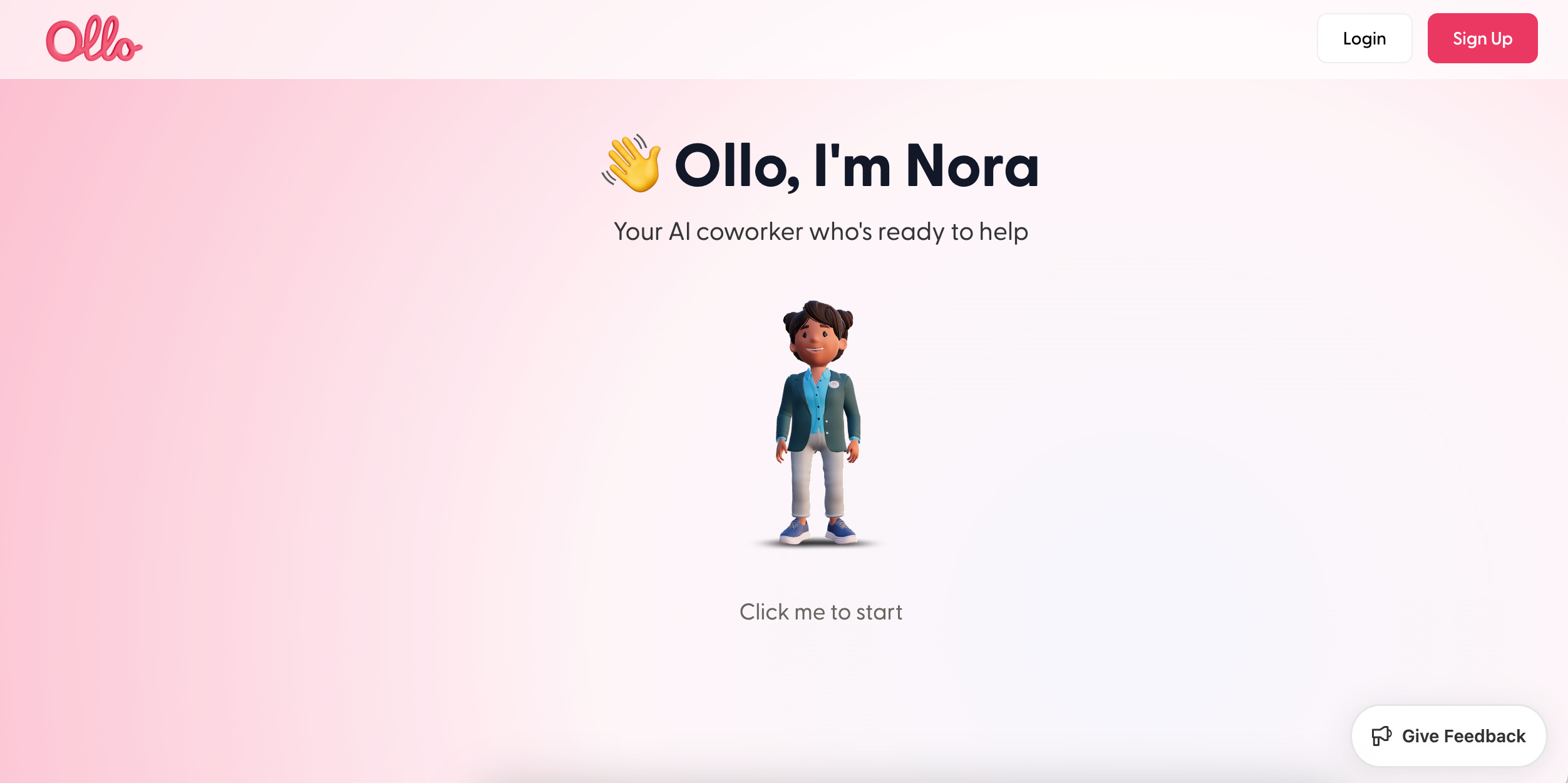
Enter Ollo: the everything agent
Neople was a customer support agent. Ollo was your everything agent.
It was our answer to “what if?” What if we made something universal? What if people could just talk to it and build workflows without touching a single node or configuration screen?
A new colleague joins the team, can integrate with everything, and you just by talking make it work. That was the mission.
We split the team. Gave a small group full focus. Told them: move fast, stay nimble, build the future.
And they did. Sort of.
The part where it gets interesting
Here’s what we learned: We changed too many things at once.
New Ideal Customer Profile. New go-to-market motion. New product paradigm. New technical foundation.
We changed too many parameters at the same time, which was making it even harder for ourselves to be successful. Too many moving parts to achieve the full focus we intended and knew was necessary to ship an MVP.
Rookie move? Maybe. But also: necessary.
Because the market was moving. Agentic AI was becoming real. Customers were ready for something different. If the market is ready, then it will come and it will come fast, especially in the AI space. So then you try to be first or try to be faster.
So we jumped. And we learned mid-air.
What we actually built
Ollo ran for about six weeks of real user testing. Not long. Probably too short to really see if it was successful or not, if I’m being honest.
But long enough to see what worked and what didn’t.
What didn’t: The everything-for-everyone approach. It was deliberately broad. Which means that you’re solving too many issues at the same time. Making it complex and making it unclear.
What did: The underlying architecture. The agentic reasoning. The conversational-first design philosophy. The idea that people should get value in thirty seconds, not three months.
We pulled the plug on Ollo as a standalone product. But we didn’t throw it away.
The unexpected gift
Here’s where it gets good.
All that technology we built? All those assumptions we challenged? They’re now baked into the newest version of Neople. Not as a separate product, but as the foundation of what we do.
We moved from retrieval-augmented generation to agentic reasoning. The whole paradigm for how to work with AI has shifted to agentic. From rigid prompting to intelligent decision-making. From “set up your knowledge base first” to “start talking and see what happens.”
We started with the starting point that you have to get value in thirty seconds. Getting value out of the product in a shorter amount of time. That’s a better starting point than from three months and moving back.
Ollo forced us to rethink everything. And when we came back to our core product, we saw it with fresh eyes.
Five things we learned (so maybe you don’t have to)
1. You can’t run two companies in one
Focus isn’t optional. You need it to move fast. Even when we tried to isolate the team, full focus proved impossible inside the same company. Pick one bet. Make it count.
2. Timing is a bet on technology itself
You constantly have to make a bet on how far the technology will be in half a year or a year from now. We were early. The models weren’t quite ready. Browser automation needed more scaffolding than we’d hoped. Sometimes being early is exactly where you need to be, but it’s still a gamble.
3. Always bet on laziness
I will always bet on laziness. If something is simpler to do, cheaper to do, easier to do—it wins. Eventually. Always. People try to take a shortcut. Exactly. Build for that instinct.
4. It’s easier to go broad than to go narrow
It’s easier to move from individual to enterprise than from enterprise to individual. Starting from “make it simple enough for anyone” beats starting from “make it powerful enough for enterprises” and working backward. It’s harder for a SAP to move to a small business owner than for a Shopify to move to Adidas.
5. The right amount of specific matters more than you think
You can quite easily make an overfit product where you’re trying to solve one specific thing, which can be easily quite successful. But it’s harder to break out of it. The trick is finding the right specificity. The right moment. The right bet.
What comes next
We’re not done experimenting. Not even close.
But now we know: focus matters more than ambition. Solving one thing brilliantly beats solving everything adequately. And sometimes the best outcome of an experiment is learning what not to do.
On one hand, you could say, “Oh, okay, Ollo doesn’t exist now.” On the other hand, it does exist, actually. Parts of it exist in our current product.
Ollo doesn’t exist as a product anymore. But it exists in every line of code we write. Every conversation our Neople have. Every customer who gets value in seconds instead of months.
We built the wrong product. And that was exactly right.
We’re building in public at Neople and sharing the messy, uncertain, occasionally backwards journey of creating something new. If you’re building something too, I hope this helps. Even if it’s just knowing you’re not the only one who takes the scenic route.
